Focus on the right zone
Isolate the main vessel, twin snorkels, alloy chute, top ducts, and exterior details to review access and reference geometry.
Bring the vessel, twin snorkels, and refractory layers into one navigable reference ... the starting point for a consistent inspection record.
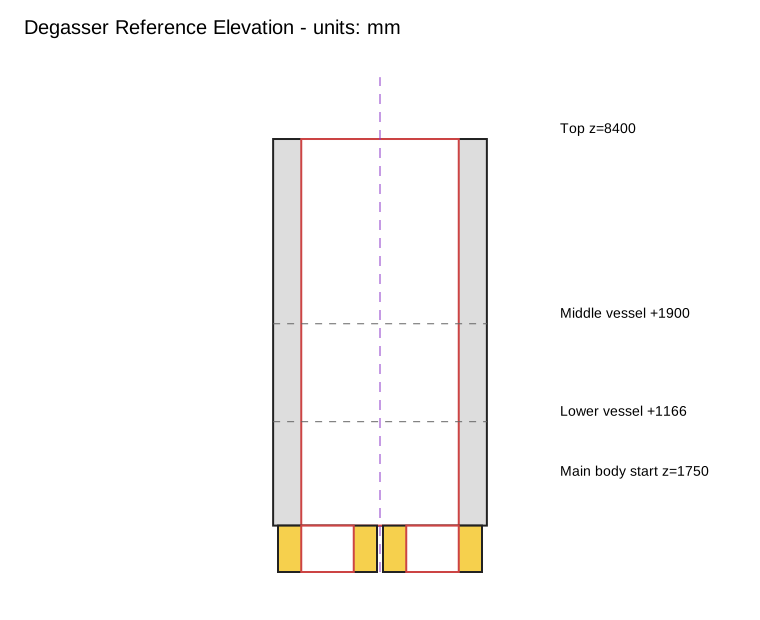 AMNS degasser · Drawing-derived referenceOpen 3D demo ↗
The drawing-derived model is available for review. A registered degasser field scan and validated condition measurements are not included in this demonstration.
Isolate the main vessel, twin snorkels, alloy chute, top ducts, and exterior details to review access and reference geometry.
Toggle working refractory, backup, board and blanket, and steel layers. Use section cuts and layer spread to understand the build-up.
Switch from the fast assembly view to the detailed model and search individual objects. Brick layouts include documented approximations.
Record the asset, station setup, operating context, and visible surfaces.
Confirm reference geometry, registration quality, coverage, and repeatability.
After acceptance, compare the same zones against the baseline and prior visits.
Keep 3D evidence, review notes, and accepted measurements in one asset record.
Begin with drawing applicability, field dimensions, scan access, and stable alignment features. Accepted repeat scans can then support zone-by-zone surface-change review and repair planning.
Discuss a degasser pilot →